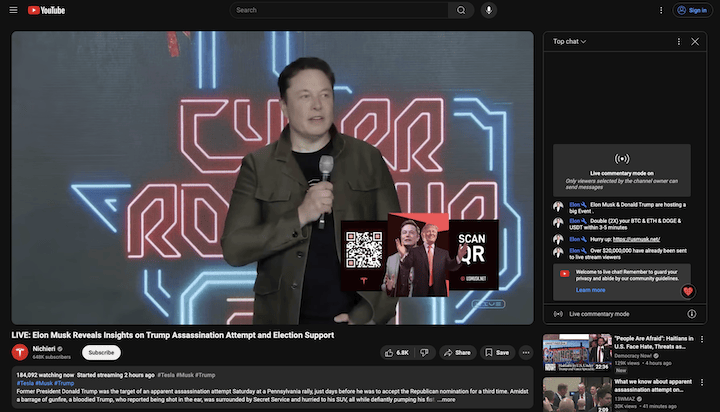
• This is a photo from a similar live you tube video that I have seen.

    How Does This Scam Work?
    This scam uses three powerful persuasion techniques: appeal to authority, urgency, and a too-good-to-be-true promise.

    Appeal to Authority:
    The scammers use Elon Musk because he is one of the most recognizable people in technology, business, and cryptocurrency discussions. Many people know his name, follow his companies, or have seen him in the news. By using his image, voice, or an video clip in a livestream, scammers try to make the giveaway look legitimate and you should trust it due to the name of Elon Musk.

    However, a famous person appearing in a video does not prove that they support the offer. Scammers can reuse real interviews, copy pictures, create fake accounts, or use AI-generated content. The scam depends on people trusting Elon Musk’s image instead of checking whether the giveaway is real.

    Urgency:
    The livestream may say things such as, “Limited offer,” “Hurry before time runs out,” or “Over 30,000,000 people have already participated.” These messages create the illusion that viewers do not have time to investigate.

    That pressure is intentional. The scammers want people to act quickly, send crypto, and avoid opening a new tab to fact check. If an offer is real, it should still be there after you take a few minutes to research and validate it.

    Too Good To Be True
    The largest warning sign is the promise: “Send Bitcoin or Ethereum and receive double back.”

    Think about it: Why would a stranger—or even a billionaire—double your money for free? Legitimate investments do not guarantee instant profits with no risk. A real company or celebrity does not need people to send cryptocurrency first in order to give them more cryptocurrency later.

    Once a victim sends Bitcoin or Ethereum to the wallet shown in the livestream, the scammer keeps it. The victim does not receive double their money back.

    “One victim who reportedly lost $6,000 in the scam told the BBB that “the impersonator claimed to be Elon Musk promising a car, house $250000 [SIC]. I must pay for transportation of car and taxes.”​ ​ ​if this does happen to you, you should go to the Internet Crime Complaint Center which the FBI runs.
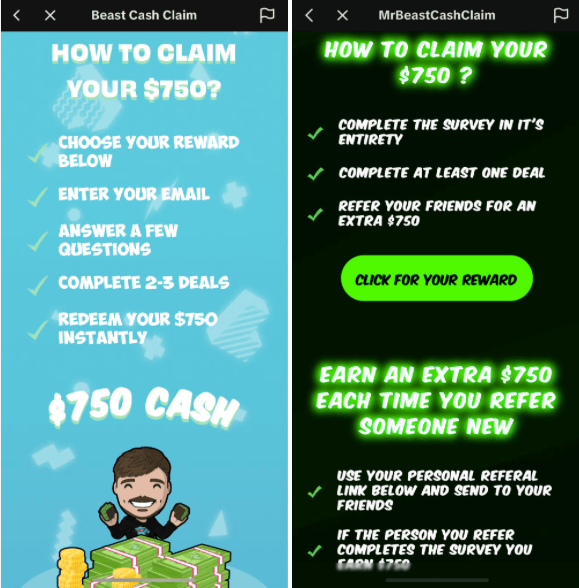
    Mr Beast the king of giveaways!

    When you see a message or even a comment that says click me to collect your winnings. This could take you to a page like above. It may look like a real site like MrBeastCashClaim. Other times it could be you scrolling comments on a video that looks like:
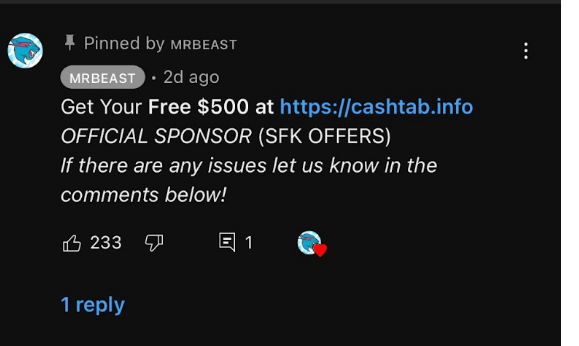
    These kind of posts will lead you to survey sites that make you do 3-5 activities but really makes you do 15-20 . These could be app signups that require credit cards to make accounts for “free” but in the fine print lists reoccurring charges. You will also be asked many personal questions that they will turn around and sell to make money off your personal information.

    Tips to get not get tricked

    Verify the user: When you get a message verify who it is. looking at the above photo the user is MRBEAST on YouTube but the real one is MrBeast. The user name looks extremely close to the real one but is not. iIf you go to the profile you would not see the world famous MrBeast channel.

    Completing deals= paying. If you have to complete deals you are paying for it.

    Fine print= you have to read the fine print to find the hidden cost. Scammers hid the scam in the fine print that most people skip reading. That’s where you find the reoccurring charges or the actually cost of your “free” gift or money.
  • Misinformation has became a popular topic in todays society of social media. You can go an hour of scrolling without seeing some. The rise of Smart phones and AI have been what was once a niche that few people learned into as easy as asking ChatGPT to make a false post about anything you want. Social media platforms have started to take a huge stance against this misinformation. We will look at 2 examples of this.

    X (Twitter)

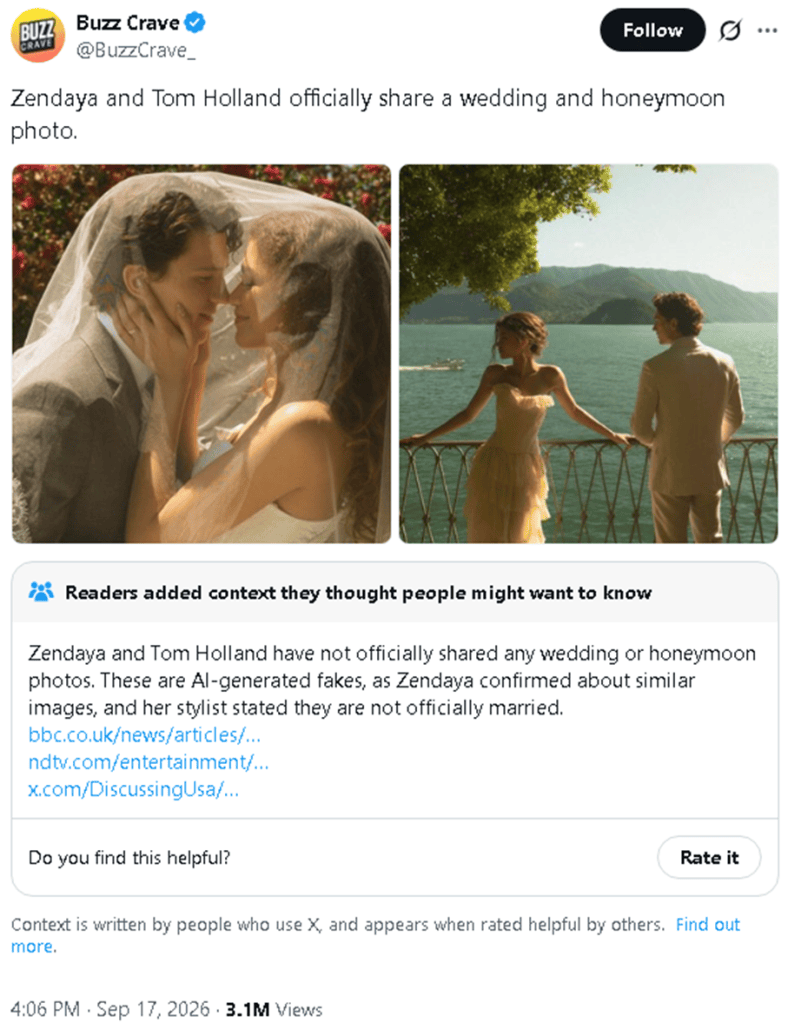
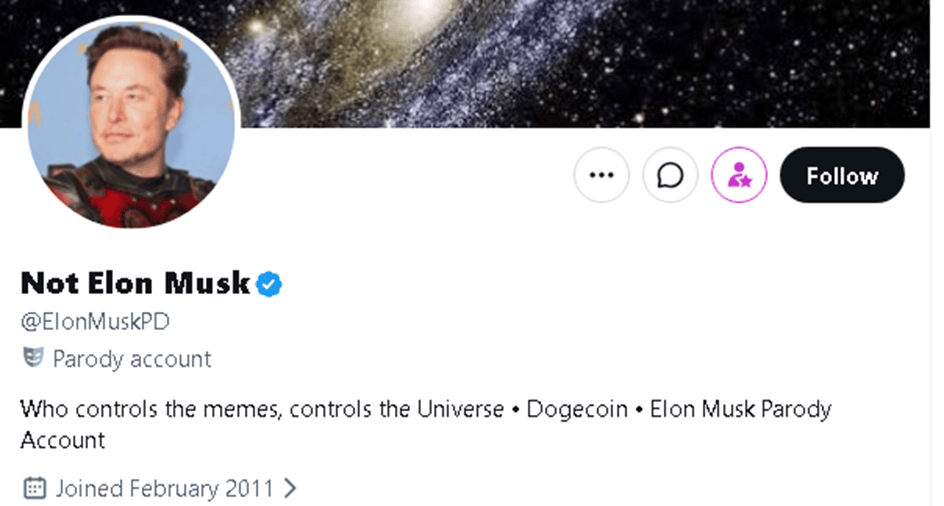
    X instituted Community Notes. These are notes that get added to the bottom of posts that give additional context to the post. The goal is instead of X removing posts that may be misinformation but doesn’t brake there polices they get notes added to them. The goal of the notes to add context to potentially misleading posts. This is a collaborative program that uses real people to add notes. Notes are suggested by uses then rated for helpfulness before becoming public to all users.  Another way they are curbing misinformation is by requiring Authenticity. This rule makes it so you cant use fake personas or impersonations in the goal of misleading others. If you had a profile that was impersonation you would have to clearly indicate that it is a parody account to not mislead others.

    Above is an example. The post shows wedding photos of Zendaya and Tom Holland. However the community note added that the couple has not shared any photos and that the images are AI, with links for more information.

    This is an extremely effective way to reduce misinformation because it keeps much of the platforms own influence out and relies on its users to make comments and to rate them allowing users to curb misinformation themselves and others to fact check those same notes.

    Likewise adding parody account label to accounts that are impersonations makes the quick user check if it’s a real account very simple just by reading the username.

    An improvement the platform could do is to allow AI to make community notes  and let users rate them to then become public. AI has been getting better and is more transparent these days. AI could make posts quicker to stop misinformation faster then waiting on humans to make the community note.

    YouTube

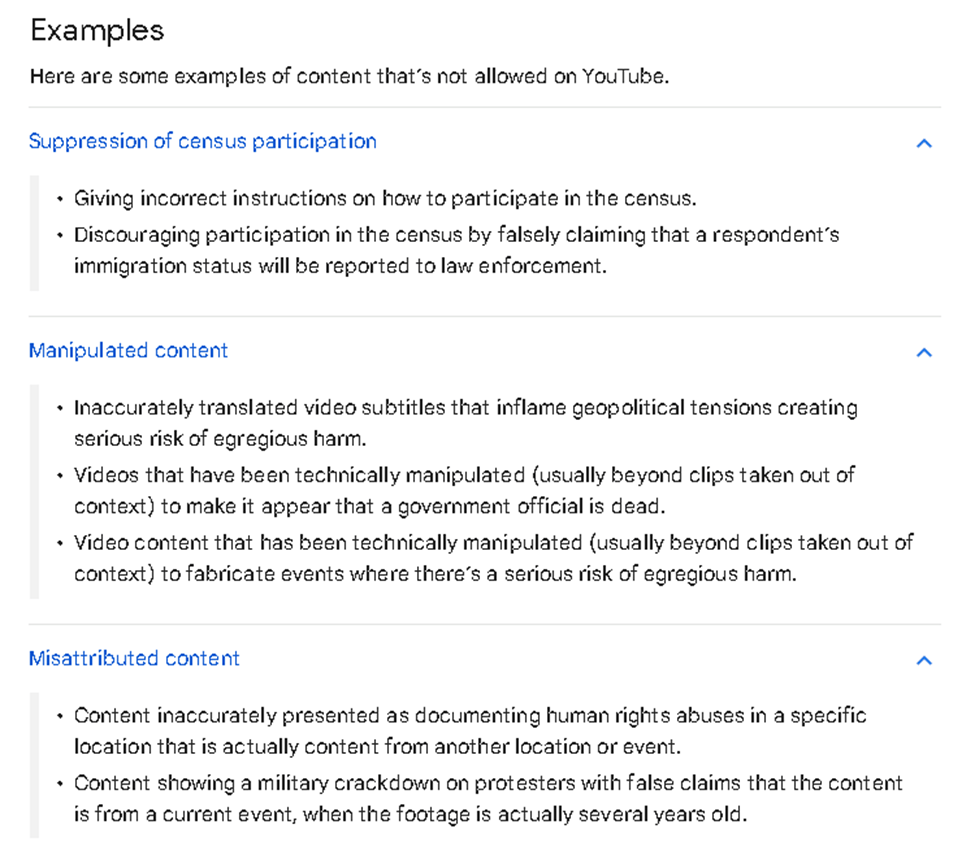
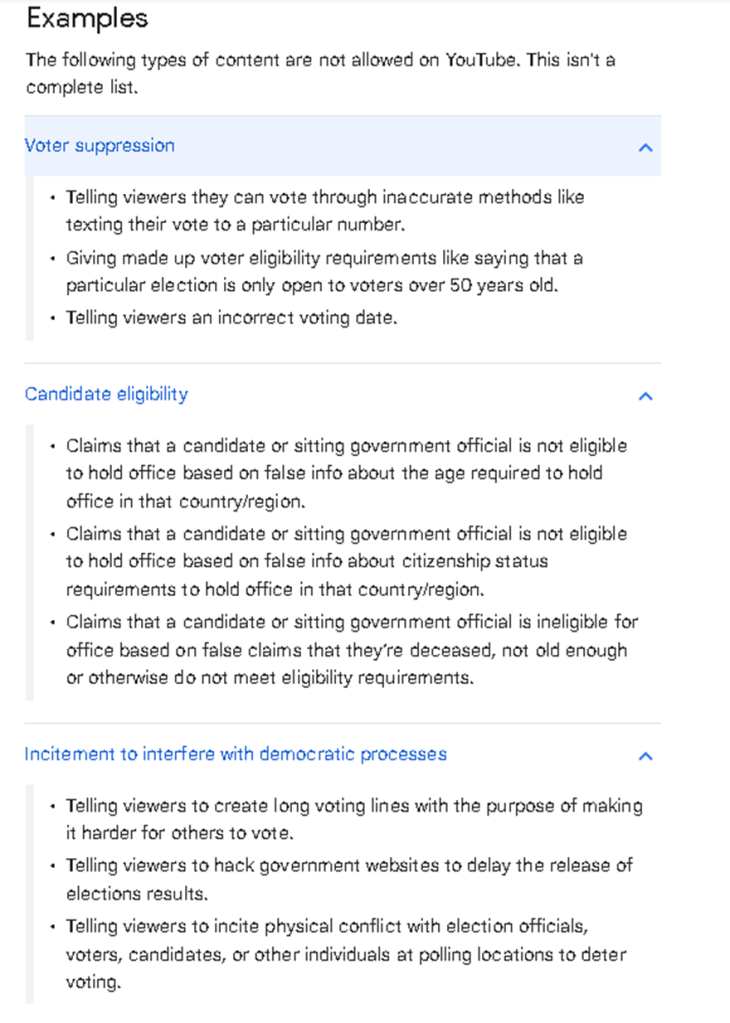
    YouTube Strikes, just like baseball 3 strikes and your out. Every time a video violates the YouTube community guidelines they get a strike. After 3 in a 90 day period your channel gets terminated. YouTube has normal guidelines for thinks like nudity or spam. They also have misinformation policies. In addition to normal misinformation they have 2 special sections for election and medical misinformation. There misinformation policies goes over suppression of census participation, manipulated content and misattributed content. For the last 2 it does require that the post may cause a serious risk for harm.

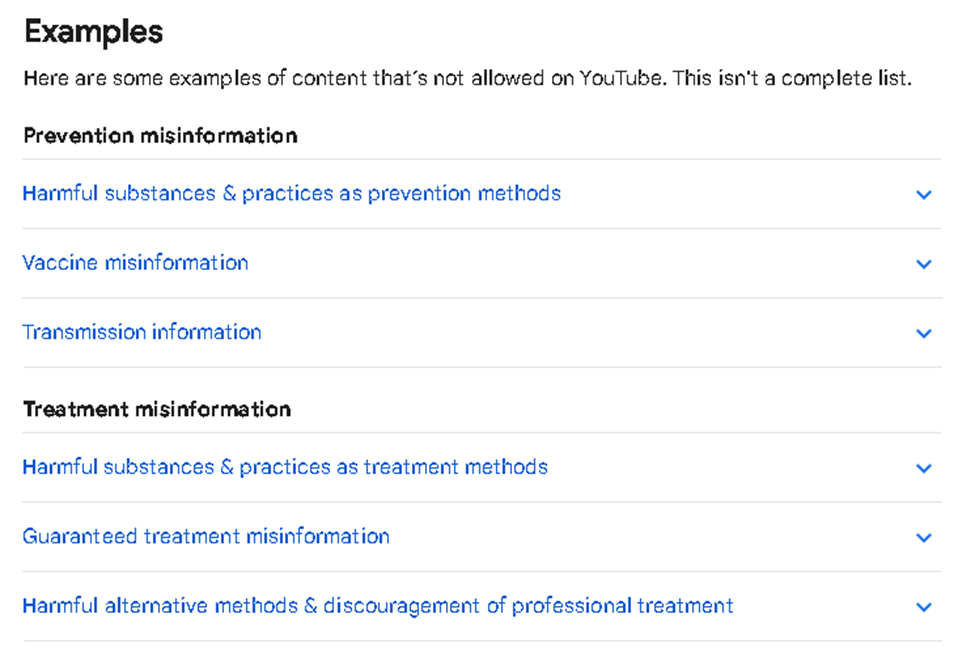
     Lastly their medical misinformation covers  prevention and treatment misinformation.

    these polices are interesting because they made a focuses on medical and election misinformation. Both have been in the news for recent years. Medical misinformation came up a lot due to COVID. A systematic analysis of misinformation on YouTube surrounding COVID 19 found on December of 2022 that 10% of the most popular videos regarding COVID-19 vaccine were misinformation.

    This showed that YouTube polices were working but were not perfect. YouTube has to review videos for claims of violations to its polices. Misinformation takes time to decided if it is misinformation and with any user able to report a video. It takes YouTube a long time to review content. Employing YouTube viewers may be a help for there system. You can pay YouTube watchers who report things that are a violation that ends up to be a real violation. Over time they could gain confidence in peoples ability to determine misinformation and pay them more to be the reviewer not just the one who finds violation but also the ones who review and deem it true. This could help reduce the time it takes for videos to be reported and taken down by adding a monetary incentive to its normal users.  

    Both platforms are attacking misinformation to ensure they are spreading misinformation but the issue is time. It takes time for posts to be found to be in violation and that is were the danger is. People have to always be caution that misinformation is out that and if a post is suspicious they need to check the post themselves.

  •  Claim Analysis

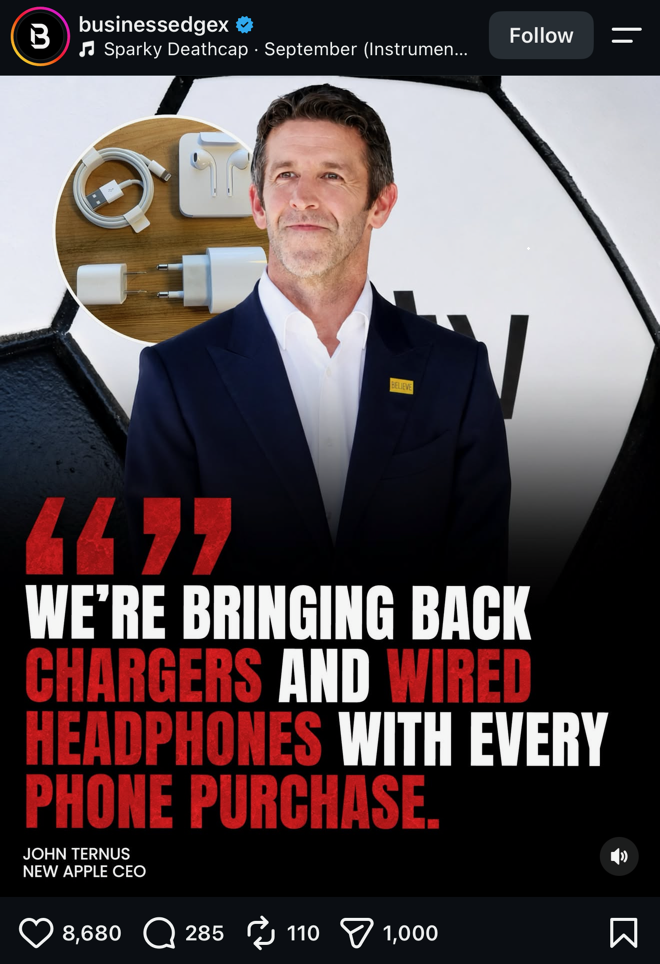
    When scrolling on Instagram like i do every night, I saw an interesting post that was suggested by Instagram for me.

    This post caught my eye as an Apple user. It’s been some time since Apple included a charger and, even longer, wired headphones so i immediately thought this would be a post i needed to check its validity to determine if its true.

    To determine if this post is true, I’ll be using Rumor Guard’s factors.I think the Factors they use give a good sense of how to determine how true something is. They do a good job of explaining what each factor is and even link videos going into more detail.

    Is it authentic? No, this isn’t a photo posted by Apple or an Apple affiliated account. The photo is clearly a edited phone showing a mix of images together with a caption claiming words spoken by John Ternus the new Apple CEO.

    Has it been posted or confirmed by a credible source? No, looking into BusinessEdgeX you find its Instagram account is connected to a Linkedin where they state they “attract an engaged audience”. They also claim they can promote you if you DM them. The only other post is from Hoops carve which is a self claimed Parody & Satire account. We could stop here as it appears to be a repost of a parody’s account post.

    Is there evidence that proves the claim? No, there was no evidence for this post to be true. The post doesn’t link to any evidence like a speech or press release.

    Is the context accurate? No, Apple announced in 2020 the removal of headphones and chargers to reduce carbon emissions. This post is the opposite of what Apple has put out itself. the only thing true is that Apple has a new CEO.

    Is it based on solid reasoning? No, headphones have become an extremely popular item to buy; even Apple has multiple headphone options. Chargers are not USB-C which is a universal charger so new Apple devices would be able to charge on users’ existing chargers. There would be no reason for Apple to give away free headphones and chargers anymore.

    Conclusion: False post. There were many red flags, the first of which was whether it had been confirmed. It was in fact confirmed not by a credible source but by a parody account. In every factor, the post failed. There is no credible claim that the new CEO of Apple said anything about including headphones and/or chargers with purchases. The Rumor Guard Factors method for debunking misinformation was a very easy method to employ here that uses lateral reading to determine if a post is true. It’s important to check posts like these. At first I was surprised because they haven’t given free headphones in a long time, and I could use an extra pair, so I was intrigued by this post. But since I am an Apple user, my suspicion hit right away, thinking that it was false because why would a large company like Apple give away anything for free when profit is what really matters.

  • Rumor Guard

    Is the post real or fake? Too many people today are making social media posts that are 100% false but present them as real. There are many people trying to help filter the real from the fake. Rumorguard.org is one of those trying to help.  

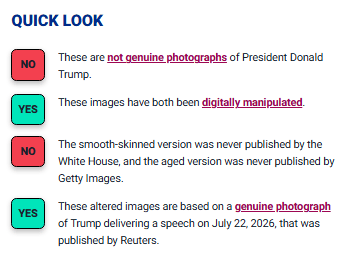
    This site takes new popular posts and applies a simple 5-question test to each of them. Is it authentic? Has it been posted or confirmed by a credible source? Is there evidence that proves the claim? Is the context accurate? Is it based on solid reasoning?. These 5 questions tell them if something is real or is it a rumor. When you read an article, these are the things each of us should be saying to ourselves to determine if something is real. This is extremely effective at teaching people how to figure out if it’s real. Take this post about Trump. It explains what they got for each of the 5 questions in this case against an altered image of Trump. They were able to check the sources the post claimed the photos came from, and it doesn’t exist. This is something each of us could do, so i think its effectiveness at teaching is huge since it explains its reasoning for why something is fake.

    I think this site is an extremely effective tool to help eradicate misinformation. It’s a very fast check to see if something is real; it only takes a few seconds to determine

    Get Bad News

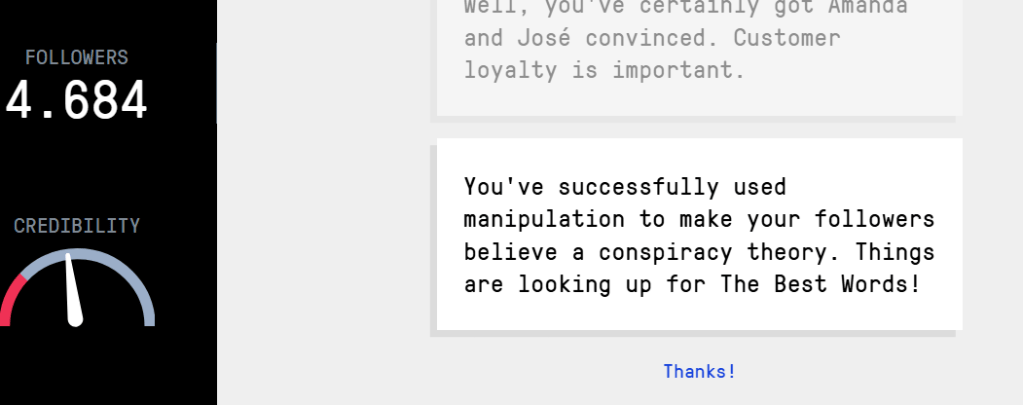
    I played all the games and didn’t like any of them… the last one I did, I went the furthest: “Get bad news”. This site is a game where you are trying to spread false information and make it as real as possible to get the most followers out of it. It gives options to post, and if you want, you can skip a few to get the most emotional response possible to gain the most followers from it.

    This is a decent teaching aid. I think one of the worst issues with this is that it’s not meant for our age. This game feels more geared towards toes in middle or high school, maybe in a school class about misinformation. There is a lot of plot for a game that is teaching misinformation. I would have found a game where you point out why something is misinformation as a better alternative. These games are just too boring to play. Taking away from its educational value.

    While I may not like the game I do think there is value in it. A younger age may be able to learn effectively how misinformation is made which will help end its spread.  There is a European article that is all about countering disinformation through games. One of the most important aspects was that it should be neutral and not try to sway the player toward an ideal. 

  • 24-Hour Media Diet:

  • First Post.

    29 Years: 10,769 Days.

    why is it the older we get, we still feel like its not that old?